

English Corner
KlausGraf - am Montag, 30. November 2015, 17:47 - Rubrik: English Corner
noch kein Kommentar - Kommentar verfassen
KlausGraf - am Dienstag, 24. November 2015, 17:16 - Rubrik: English Corner
noch kein Kommentar - Kommentar verfassen
KlausGraf - am Montag, 9. November 2015, 01:14 - Rubrik: English Corner
noch kein Kommentar - Kommentar verfassen
http://macrotypography.blogspot.de/2015/11/digita-vaticana-exceeds-3000.html
"Digita Vaticana, the manuscript digitization programme at the Biblioteca Apostolica Vaticana (BAV) in Rome, exceeded 3,000 items on its main index page on November 3, 2015, meaning that it is now the biggest digitization program in Italy, having overtaken the Biblioteca Medicea Laurenziana in Florence, where the Teca Digitale stalled at 3,000 after using up its grant four or five years ago."
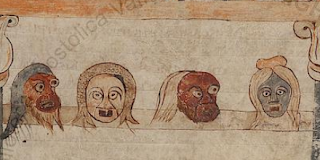
"Digita Vaticana, the manuscript digitization programme at the Biblioteca Apostolica Vaticana (BAV) in Rome, exceeded 3,000 items on its main index page on November 3, 2015, meaning that it is now the biggest digitization program in Italy, having overtaken the Biblioteca Medicea Laurenziana in Florence, where the Teca Digitale stalled at 3,000 after using up its grant four or five years ago."
KlausGraf - am Mittwoch, 4. November 2015, 22:05 - Rubrik: English Corner
noch kein Kommentar - Kommentar verfassen
http://britishlibrary.typepad.co.uk/digitisedmanuscripts/2015/11/worcester-rental-acquired-by-the-british-library.html
"The British Library holds one of the largest collections of medieval monastic records from the British Isles. And we have just added to that, with the acquisition of an important 13th-century rental from Worcester Cathedral Priory. The whole manuscript has also been fully digitised, and is now available to view on our Digitised Manuscripts site (Add MS 89137)."
"The British Library holds one of the largest collections of medieval monastic records from the British Isles. And we have just added to that, with the acquisition of an important 13th-century rental from Worcester Cathedral Priory. The whole manuscript has also been fully digitised, and is now available to view on our Digitised Manuscripts site (Add MS 89137)."
KlausGraf - am Dienstag, 3. November 2015, 20:11 - Rubrik: English Corner
noch kein Kommentar - Kommentar verfassen
"If those of us interested in books (and other things) as artifacts, not just vessels for an abstract text (or other meaning) have learned, often by sad experience, it’s that we can’t tell what aspects of a physical object and its pieces and their relationship may turn out to be of value in reconstructing the historical record and better understanding what went on in the past.
One of the best examples of this is provided by a courageous publication by Nicholas Pickwoad, "Swaffham revisited: A review of the earlier conservation of books in the Swaffham Parish Library,” in which he examines work he had done twenty years previously and documents what rebinding and other conservation work had destroyed or obscured. The work he did was perfectly acceptable at the time, indeed recommended practice. The essay should be read by all curators who think of rebinding old books, or otherwise altering historical artifacts, as well as anyone else interested in the preservation of artifactual evidence. Happily, the essay is available on the internet: http://iada-home.org/ta99_097.pdf "
John Lancaster in EXLIBRIS-L
See also
https://www.academia.edu/1834228/_Physical_Evidence_and_Manuscript_Conservation_A_Scholars_Plea_
One of the best examples of this is provided by a courageous publication by Nicholas Pickwoad, "Swaffham revisited: A review of the earlier conservation of books in the Swaffham Parish Library,” in which he examines work he had done twenty years previously and documents what rebinding and other conservation work had destroyed or obscured. The work he did was perfectly acceptable at the time, indeed recommended practice. The essay should be read by all curators who think of rebinding old books, or otherwise altering historical artifacts, as well as anyone else interested in the preservation of artifactual evidence. Happily, the essay is available on the internet: http://iada-home.org/ta99_097.pdf "
John Lancaster in EXLIBRIS-L
See also
https://www.academia.edu/1834228/_Physical_Evidence_and_Manuscript_Conservation_A_Scholars_Plea_
KlausGraf - am Samstag, 31. Oktober 2015, 17:29 - Rubrik: English Corner
noch kein Kommentar - Kommentar verfassen
KlausGraf - am Dienstag, 27. Oktober 2015, 17:01 - Rubrik: English Corner
noch kein Kommentar - Kommentar verfassen
http://americanarchive.org/
"With contributions from more than 100 public media organizations across the country, programs that for decades have gathered dust on shelves are now available to stream on the AAPB website. This rich collection of programs dating from the 1940s to the 2010s will help tell the stories of local communities throughout the nation in the last half of the 20th century and first decade of the 21st.
Initially launched in April 2015 with 2.5 million inventory records, the AAPB website has added nearly 7,000 audiovisual streaming files of historical content from public media stations across the country. "
But not for German users (without US proxy): "Please note: This content is currently not available at your location."
"With contributions from more than 100 public media organizations across the country, programs that for decades have gathered dust on shelves are now available to stream on the AAPB website. This rich collection of programs dating from the 1940s to the 2010s will help tell the stories of local communities throughout the nation in the last half of the 20th century and first decade of the 21st.
Initially launched in April 2015 with 2.5 million inventory records, the AAPB website has added nearly 7,000 audiovisual streaming files of historical content from public media stations across the country. "
But not for German users (without US proxy): "Please note: This content is currently not available at your location."
KlausGraf - am Dienstag, 27. Oktober 2015, 14:57 - Rubrik: English Corner
noch kein Kommentar - Kommentar verfassen
http://researchbuzz.me/2015/10/26/uk-archives-fcc-echo-more-monday-afternoon-buzz-october-26th-2015/
“In early 2015, the Port of Los Angeles clandestinely closed its archival facilities and ended its program to preserve and protect its historic records. The historic resources were removed from the appropriate archival storage facility and placed in storage conditions that are inhospitable to any kind of records. The current facilities suffer from vermin infestation and are located directly adjacent to the water; the humidity is on any given day approximately 15-20 percent higher inside than it is outside the facility. The historic records are in immediate danger of being lost forever.”
Researchbuzz's link isn't working any more.
Update: From Google Cache:
"The Port of Los Angeles Archives Have Been Closed!
October 22, 2015
The Port of Los Angeles Archives were clandestinely closed in February and the program to preserve its historical materials has been terminated. 100+ years of Port and community history are in danger of being lost forever.
In 2010, The Port of Los Angeles, with the full approval of the Los Angeles Harbor Commission and the Port of Los Angeles Executive Director, began a program to identify, protect and preserve its historic resources.
An estimated 25,000 linear feet of historic materials have been identified, an enormous collection practically unknown to scholars and researchers. This includes operational records, accounting ledgers, maps, engineering blueprints, promotional material and assorted ephemera, many of which have been featured on this blog.
The enormous significance of this material cannot be understated. The maps and blueprints alone offer a unique representation of the communities that once thrived in and around Los Angeles Harbor: the Brighton Beach resort, the East San Pedro squatters (including Charles Lummis, a figure integral to LA history) and the Japanese American community that was wrongly removed from Terminal Island during internment. Several of the maps date to the 1880s and show Dominguez family lands, land parcels owned by the Banning Family, the Lower Reservation of Fort MacArthur (before demolition) and San Pedro & Wilmington prior to commercial development. There are also alternative design plans for Los Angeles Harbor, the San Pedro Waterfront, Cabrillo Beach and Terminal Island that were changed at the last minute or never fully realized.
The archives were previously retained in the former Coast Fishing Company Offices in Wilmington. By 2010, the building had been converted to a proper archival facility. This included climate controls, security in the form of storage rooms with keyed entry and space to process oversized historic materials such as maps.
In early 2015, the Port of Los Angeles clandestinely closed its archival facilities and ended its program to preserve and protect its historic records. The historic resources were removed from the appropriate archival storage facility and placed in storage conditions that are inhospitable to any kind of records. The current facilities suffer from vermin infestation and are located directly adjacent to the water; the humidity is on any given day approximately 15-20 percent higher inside than it is outside the facility. The historic records are in immediate danger of being lost forever.
Additional details can be found here:
http://www.lavatransforms.org/video/port-of-los-angeles-archive/
The Port of Los Angeles prides itself on “social responsibility” but it has clearly fallen short of that ideal. If you want to make the Port live up to its responsibilities then please sign this Change.org petition:
https://www.change.org/p/los-angeles-harbor-commission-port-of-los-angeles-executive-director-gene-seroka-save-the-port-of-los-angeles-archives "
“In early 2015, the Port of Los Angeles clandestinely closed its archival facilities and ended its program to preserve and protect its historic records. The historic resources were removed from the appropriate archival storage facility and placed in storage conditions that are inhospitable to any kind of records. The current facilities suffer from vermin infestation and are located directly adjacent to the water; the humidity is on any given day approximately 15-20 percent higher inside than it is outside the facility. The historic records are in immediate danger of being lost forever.”
Researchbuzz's link isn't working any more.
Update: From Google Cache:
"The Port of Los Angeles Archives Have Been Closed!
October 22, 2015
The Port of Los Angeles Archives were clandestinely closed in February and the program to preserve its historical materials has been terminated. 100+ years of Port and community history are in danger of being lost forever.
In 2010, The Port of Los Angeles, with the full approval of the Los Angeles Harbor Commission and the Port of Los Angeles Executive Director, began a program to identify, protect and preserve its historic resources.
An estimated 25,000 linear feet of historic materials have been identified, an enormous collection practically unknown to scholars and researchers. This includes operational records, accounting ledgers, maps, engineering blueprints, promotional material and assorted ephemera, many of which have been featured on this blog.
The enormous significance of this material cannot be understated. The maps and blueprints alone offer a unique representation of the communities that once thrived in and around Los Angeles Harbor: the Brighton Beach resort, the East San Pedro squatters (including Charles Lummis, a figure integral to LA history) and the Japanese American community that was wrongly removed from Terminal Island during internment. Several of the maps date to the 1880s and show Dominguez family lands, land parcels owned by the Banning Family, the Lower Reservation of Fort MacArthur (before demolition) and San Pedro & Wilmington prior to commercial development. There are also alternative design plans for Los Angeles Harbor, the San Pedro Waterfront, Cabrillo Beach and Terminal Island that were changed at the last minute or never fully realized.
The archives were previously retained in the former Coast Fishing Company Offices in Wilmington. By 2010, the building had been converted to a proper archival facility. This included climate controls, security in the form of storage rooms with keyed entry and space to process oversized historic materials such as maps.
In early 2015, the Port of Los Angeles clandestinely closed its archival facilities and ended its program to preserve and protect its historic records. The historic resources were removed from the appropriate archival storage facility and placed in storage conditions that are inhospitable to any kind of records. The current facilities suffer from vermin infestation and are located directly adjacent to the water; the humidity is on any given day approximately 15-20 percent higher inside than it is outside the facility. The historic records are in immediate danger of being lost forever.
Additional details can be found here:
http://www.lavatransforms.org/video/port-of-los-angeles-archive/
The Port of Los Angeles prides itself on “social responsibility” but it has clearly fallen short of that ideal. If you want to make the Port live up to its responsibilities then please sign this Change.org petition:
https://www.change.org/p/los-angeles-harbor-commission-port-of-los-angeles-executive-director-gene-seroka-save-the-port-of-los-angeles-archives "
KlausGraf - am Montag, 26. Oktober 2015, 23:02 - Rubrik: English Corner
noch kein Kommentar - Kommentar verfassen
http://permalink.gmane.org/gmane.education.libraries.autocat/66514
"I suggest this disturbing article from the Atlantic, about the
disappearance from the web of an article that was a finalist for a
Pulitzer Prize as recently as 2007.
http://www.theatlantic.com/technology/archive/2015/10/raiders-of-the-lost-web/409210/" (James Weinheimer).
"I suggest this disturbing article from the Atlantic, about the
disappearance from the web of an article that was a finalist for a
Pulitzer Prize as recently as 2007.
http://www.theatlantic.com/technology/archive/2015/10/raiders-of-the-lost-web/409210/" (James Weinheimer).
KlausGraf - am Freitag, 16. Oktober 2015, 16:54 - Rubrik: English Corner
noch kein Kommentar - Kommentar verfassen


